

APPs is yours to own
APPs is OutcomePath’s modular method for client-owned AI, automation and workflow solutions. It is not a single product.
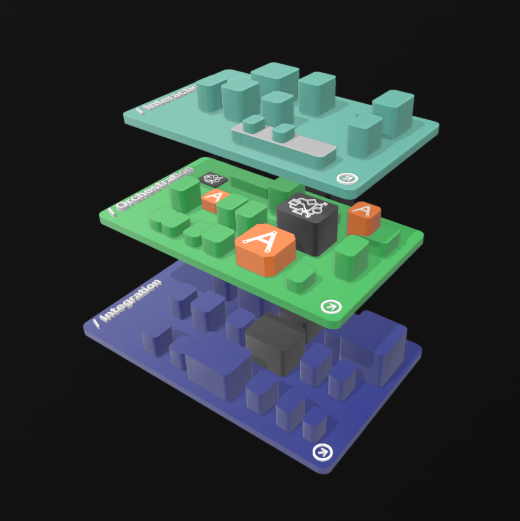
Not a monolithic replacement. A flexible operating layer across Interaction, Orchestration and Integration, working with the systems you already have.
Why APPs exist
Own the intelligence that runs your business.
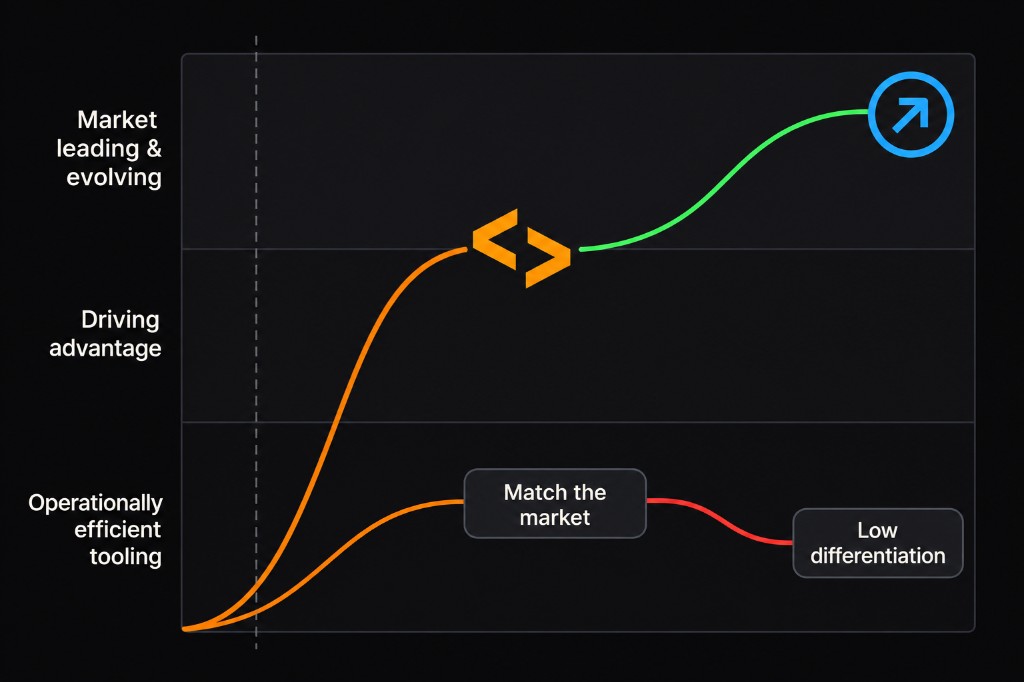
Most businesses are surrounded by tools, platforms and disconnected AI experiments.
APPs helps centralise the logic, workflows and automation that make your business work, without forcing you to rip out the systems you already use.
You keep your systems of record.
The operating layer around them is designed for client ownership. What you own, where it is hosted, and any third-party cost depend on the engagement.
AI on a tight leash
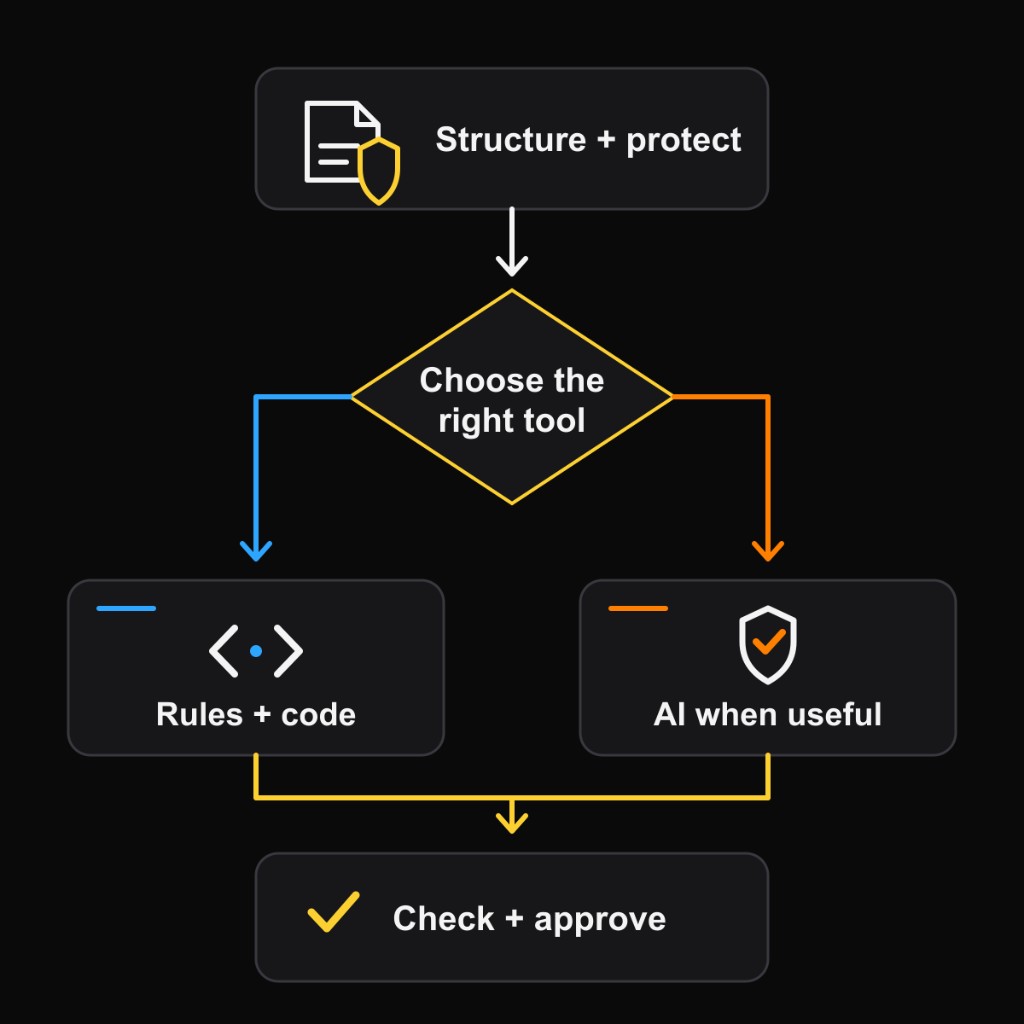
We model the work and structure information before reaching for an LLM. Rules, decision trees and ordinary software handle defined tasks; AI gets a specific job only when it adds value.
We prepare only the information needed, redact sensitive data where appropriate, and control prompts, permissions and actions. Data and AI sovereignty are part of the design: we assess where information is processed, which models and providers are involved, and how much control the client can retain. Where choices are constrained, we make the trade-offs explicit and agree the boundaries.
Checks around model use help reduce unnecessary calls and token cost. People remain accountable for consequential decisions.
What APPs are
Modular components. One adaptable system.
Interaction
How people and systems engage. Screens, forms, PDFs, reports, voice, chat or workflow touchpoints.
Orchestration
Where the intelligence sits. Rules, workflows, agents, automations, memory, permissions and decision support.
Integration
Where your existing systems connect. CRM, CMS, DAM, ecommerce, data stores, legacy platforms and third-party services.
Agents and automations
Smart where needed. Simple where possible.

Agents
Agents can help interpret, prepare, recommend or perform permitted actions inside a designed workflow.
They do not hold business decision authority. People remain responsible for consequential decisions.
Agents do not always need to be large AI models. Some tasks use lightweight AI. Defined tasks should use rules or ordinary software where that is enough.
Use an agent for a bounded task that needs interpretation or preparation. Do not give an agent the authority to make the business decision.

Automations
Automations are repeatable actions that make work happen consistently.
They can be simple checks, rules or triggers, or complex multi-step workflows across systems.
Automations can route tasks, validate data, generate documents, send notifications or move work through a process.
Use automations when the system needs to act, check or move things forward.
What APPs solve
Less vendor dependency. More adaptability.
APPs help businesses move away from:
- Scattered tools
- Siloed workflows
- Duplicated effort
- Local AI experiments
- Logic locked inside someone else’s product
- A standard licence for a workflow you should be able to own
And move towards:
- Capability designed for client ownership
- Reusable modules
- Shared workflows
- Governed automation
- A Foundation that can be extended
- Integration with systems you already use
- Clear controls around AI
How APPs can start
Start focused. Scale naturally.
APPs can begin as a focused point solution, grow into a business-area platform, or become a wider operating layer across the organisation.
The architecture is designed to evolve as your business changes.
Every engagement starts with the same question
WitO: What is the Outcome?
Tell us what you are trying to achieve. We will tell you, honestly, what it takes to get there, and whether we are the right partner to help.